 The Workflow Dividend
Guide › Closing a company › Assignment for the benefit of creditors
Assignment for the benefit of creditors: what happens to your company's data
An assignment for the benefit of creditors, or ABC, is how many US startups and private companies wind down when they can't pay everyone in full. The company hands its assets to an assignee, who sells them and pays the creditors. Your email, chat and project archives are among those assets, and frontier AI labs will pay for de-identified copies. Here's when to raise it, and what to keep while you do.
At a glance
- An ABC is an alternative to bankruptcy under state law. The company transfers everything it owns to an assignee, a fiduciary who sells the assets and pays creditors. ABA Business Law Today, Nov 2015, checked Nov 8, 2026 (opens in a new tab)
- Once the assignment is signed, the data belongs to the assignee. Only the assignee can license it, and the money goes to creditors.
- Raise the data before the assignment, so it's on the asset list and the assignee knows there's a buyer. Keep the Slack, Teams and email accounts running until then.
- micro1 licenses data from closed companies that had 30+ staff at their peak, for $100K to $3M+. micro1 referral partner portal, Opportunities (refer.micro1.ai/opportunities), checked Nov 8, 2026
How an ABC works
The board, and shareholders where the company's documents require it, approve the assignment. The company signs an assignment agreement that transfers all of its property to the assignee, along with a list of its creditors and assets. The assignee then runs a sale, notifies creditors, sets a deadline for claims and pays out in order of priority.
Each state has its own rules. California's process runs without a court, and sales there typically take 30 to 45 days. BevNET, 2022, checked Nov 8, 2026 (opens in a new tab) Delaware ABCs are filed in the Court of Chancery, and the assignee must provide a bond, an inventory of the company's assets and two separate appraisals. Daily DAC, 2021 (updated 2023), checked Nov 8, 2026 (opens in a new tab) Many startups are Delaware corporations based in California, so ask your attorney which state's rules apply.
Some ABCs are prepackaged: a buyer agrees terms with the assignee before the assignment, and the sale closes as soon as it takes effect. That's the easiest point to add a data license, because the asset list is being written anyway.
ABC or Chapter 7: who controls the data
| Assignment for the benefit of creditors | Chapter 7 bankruptcy | |
|---|---|---|
| Who sells the assets | An assignee the company chooses | A trustee appointed in the case |
| Court | State law. No court in some states, such as California. The Court of Chancery in Delaware | Federal bankruptcy court |
| Speed and publicity | Usually faster and quieter | Slower, and the filing is public |
| Liens | The assignee generally can't sell assets free and clear of liens. Mayer Brown, Feb 2023, checked Nov 8, 2026 (opens in a new tab) | A court-approved sale can clear liens |
| Personal data | The company's privacy promises still apply to whoever buys or licenses the data | If a sale of personal data conflicts with the company's privacy policy, the court may appoint a consumer privacy ombudsman (in Chapter 11 too) |
| Who signs a data license | The assignee, after the assignment | The trustee, after the filing |
Either way, the founders and the board lose the power to sign once the process starts. If the data is going to be part of the outcome, start the conversation before then.
Before you sign the assignment
- Keep the data alive. Don't cancel Slack, Google Workspace or Microsoft 365, and check retention settings. The assignee will need admin access to export anything.
- Get a figure. Registering with micro1 costs nothing. A proposal tells you, the board and the assignee whether the data belongs on the asset list. If the company had fewer than 30 staff, look at SimpleClosure's marketplace instead.
- Tell the assignee. Put the data and any proposal on the asset schedule. An assignee's job is to get the most for creditors, and a buyer already in the frame helps.
- Read your privacy policy and staff notices. They govern what the data can be used for. De-identification, with real names replaced before a frontier AI lab sees anything, is what makes licensing possible. My de-identification guide explains it.
- Take advice on duties to creditors. When a company can't pay its debts, its directors must weigh creditors' interests. Don't move assets around, or sign a license privately, without your attorney's view.
If you're an assignee
Workplace archives are an asset class that didn't exist a few years ago. AI training data companies such as micro1 license de-identified email, Slack, Teams and project data from companies that have stopped operating, and micro1 lists $100K to $3M+ per company. micro1 referral partner portal, Opportunities (refer.micro1.ai/opportunities), checked Nov 8, 2026 micro1 handles the export and de-identification, and the license sits alongside any going-concern or asset sale. If an estate you're handling has years of workplace data, get a quote before the accounts are shut down.
I'm happy to talk through how the process works for an estate. Send me a message.
Common questions about ABCs and company data
What is an assignment for the benefit of creditors?
A state-law alternative to bankruptcy. An insolvent company transfers all its assets to an assignee, who sells them and pays the creditors in order of priority. It's widely used to wind down venture-backed startups.
Who owns company data after an assignment for the benefit of creditors?
The assignee. The assignment transfers all of the company's property, including its rights in its records and archives, so only the assignee can sell or license them afterwards.
Can founders sell company data before an ABC?
The company can license its data while the board still controls it, but if it can't pay its debts, directors have to consider creditors first. In practice it's usually best to get a quote, then let the assignee sign, so the money goes through the estate.
Is an ABC better than Chapter 7 for selling data?
An ABC is usually faster and quieter, and the company chooses the assignee. Chapter 7 adds a court and a trustee. Either can include a data license. Ask your attorney which suits the company's debts and liens.
What happens to employees' personal data in an ABC?
The company's privacy promises and notices still apply. Data licensed for AI training is de-identified first, with names and contact details replaced, and the license should say who handles requests from former staff.
Getting a figure
Registering costs nothing and doesn't commit you. Say in the application that the company is winding down or has stopped operating.
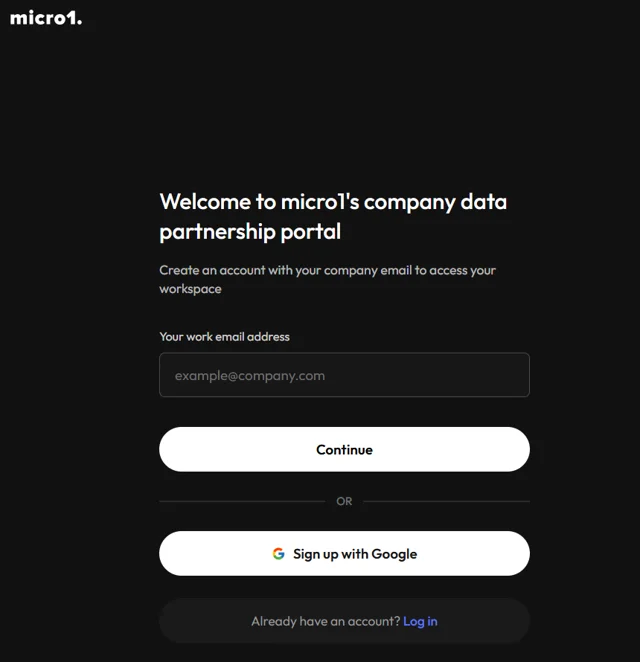 micro1 will ask you to enter your work email to register.
This is a general explanation of US practice, not legal advice. I'm not a lawyer. I'm not employed by micro1. If a company signs up through my introduction, micro1 may pay me a referral fee, which costs you nothing and doesn't change your terms.
More guides
- Why AI companies pay for dataWhat they're buying, and why everyday work is valuable
- What your data is worthPublished figures and what sets the price
- How names are protectedDe-identification, and what to ask before you sign
- Dark dataThe unused records frontier AI labs pay for
- Paid for your AI agentsHow your agents' work records can earn money
- Is micro1 a scam?The evidence it's real, and six signs of a fake offer
- Is micro1 legit?micro1's company program reviewed, concerns included
- SimpleClosure or micro1?Two ways to license company data, compared
- For DPOs: IG pack (UK)Free DPIA and assessment templates
- Pseudonymisation vs anonymisationWhen de-identified data is still personal data
- Raising money without equityHow data licensing compares with grants and loans
- Paying an HMRC tax billHow Time to Pay works, and where licensing fits (UK)
- Selling your businessYour data as an intangible asset, and due diligence
- Planning to close your companyDeal with the data before you strike off or dissolve
- Company already closedWho qualifies, and who can still sign

About the author
Sean Key has been a freelance consultant for 22 years, mainly delivering data and digital projects into the NHS. He runs Applied Clinical Judgement, which connects professionals with AI training work, and helps established companies weigh up micro1's Company Data Partnerships program.
He isn't a lawyer and isn't employed by micro1. If your company signs up through his introduction, micro1 may pay him a referral fee at no cost to you.
Sean Key on LinkedIn (opens in a new tab) · Book a call (opens in a new tab)