 The Workflow Dividend
Guide › Closing a company
Closing your company? Deal with its data first
If you're planning to close a company that's still on the register, its years of email, chat and project records may be one of the last things it owns that has value. Once the company is dissolved, that chance usually goes with it. The order you do things in decides whether you can still license the data.
At a glance
- Frontier AI labs, the companies building models like ChatGPT, Gemini and Claude, need real business records to teach their models how work gets done. AI training data companies such as micro1 license them, de-identified. micro1's partnerships start at $100k+. micro1 Data Partnerships page (micro1.ai/data-partnerships), checked Oct 23, 2026
- Ask for a quote six months or more before you plan to close. Allow around three months from registering to payment.
- In the UK, a dissolved company's remaining property passes to the Crown. In the US, a dissolved company generally has to finish selling its assets as part of winding up.
- micro1 looks for companies with 30+ employees. Smaller companies don't qualify.
Why data belongs on your closure checklist
A closure checklist usually covers debts, tax, staff, bank accounts and physical assets. Digital records tend to get archived or deleted without a second thought. Yet a company with 30+ staff and a few years of history holds a detailed record of how its people made decisions, solved problems and served customers. That's what frontier AI labs need.
Closed and closing companies are already selling this data. Fast Company reported shuttered startups selling chat and email archives for $10K to $100K each. Fast Company, Apr 2026, checked Oct 23, 2026 (opens in a new tab) micro1 runs a separate program for companies that have stopped operating, with compensation of $100K to $2M+. micro1 referral partner portal, Opportunities (refer.micro1.ai/opportunities), checked Oct 24, 2026
For a solvent company, a license payment adds to what's left for shareholders once the debts are paid. For one that's short of cash, it may be what lets the company settle everything it owes and close cleanly.
When to ask for a quote
The process takes longer than most owners expect. Once terms are agreed, micro1 says a project takes two to three weeks, and payment follows in around 60 days. micro1 referral partner interview (YouTube), checked Oct 23, 2026 Add time to review the proposal and the contract, and allow around three months from registering to money in the bank.
- Six months or more before you close
The best time. Your data is intact, staff and customers are easy to reach, and you have time to compare the proposal, take advice and pick the closure route that suits the payment.
- Three to four months before
Still workable, but tight. In the UK, the license needs to be signed before the three months of inactivity that a strike-off requires.
- After you stop trading
Harder. Subscriptions get cancelled, data gets deleted and the people who know the systems have left.
- After you apply to strike off or dissolve
Usually too late for the directors. The application has to be withdrawn, or the company restored to the register, before anyone can sign.
Registering costs nothing, so there's no reason to wait until the closure plan is final. A quote tells you whether the data is worth building into it.
The UK order of events
Most solvent UK companies close in one of two ways. Each has a point after which the directors can no longer license anything.
| Route | What it is | When to deal with the data |
|---|---|---|
| Voluntary strike-off (form DS01) | The directors apply to Companies House to remove a company that has stopped trading and settled its debts. | Before you apply. A company can't apply if it has traded or carried on business in the previous three months, and signing a data license is likely to count. License first, then let three months pass. |
| Members' voluntary liquidation (MVL) | A licensed insolvency practitioner winds up a solvent company and distributes what's left to shareholders. | Either before the liquidator is appointed, or by raising it with the liquidator, whose job includes selling the company's assets. |
After dissolution, anything the company still owned passes to the Crown as "bona vacantia" under section 1012 of the Companies Act 2006. Former directors can't license it unless the company is restored to the register first. That's slow and costly, so it's far easier to decide about the data beforehand.
Tax affects the choice of route too. Shareholder distributions in anticipation of a strike-off get capital treatment only up to £25,000 in total, under section 1030A of the Corporation Tax Act 2010. For larger amounts, accountants usually suggest an MVL. Ask yours how a license payment would be treated.
The US order of events
Closing a US company usually means filing articles of dissolution, or a certificate of dissolution, with the state where it's registered, then winding up: collecting what it's owed, paying creditors and selling assets before anything goes to owners. A data license fits naturally into winding up, but it's simpler to start the conversation before you file. The rules differ by state, so check with your attorney.
If the company can't pay its creditors in full, an assignment for the benefit of creditors or a bankruptcy puts asset sales in someone else's hands. My page on who can sign for a closed company covers those situations.
Four checks before you close
Make sure the data still exists
Check your Slack, Teams and email retention settings before anyone cancels subscriptions. Cancelling a workspace can delete years of history.
Check it can lawfully be kept
Privacy law says personal data shouldn't be kept longer than needed. Decide about licensing early, and document why you're keeping the data while you do.
Plan who to tell
Staff and customers need to know before their data is reused for a new purpose. That's easier while you can still reach them.
Name who handles requests afterwards
Once the company is gone, the agreement needs to say who deals with objections, access requests and complaints.
All of this sits on top of de-identification: real names replaced with consistent stand-ins before a frontier AI lab sees anything. My de-identification guide explains how that works and lists the questions to ask.
This is a general explanation, not legal or tax advice. I'm not a lawyer or an accountant. If the company can't pay its debts, directors must put creditors' interests first, so take advice before signing anything.
Common questions about company data and closure
What happens to company data when a company is dissolved?
In the UK, anything a company still owns when it's dissolved passes to the Crown as bona vacantia under section 1012 of the Companies Act 2006, including its rights in its records. Former directors can't license or sell it unless the company is restored to the register first.
Can I sell company assets before striking off?
Yes. Selling or disposing of assets is a normal part of closing a company. But a company can't apply for voluntary strike-off if it has traded or carried on business in the previous three months, so finish any sales or licenses first, then let three months pass before you apply.
Is company email and chat data a digital asset?
It can be. Frontier AI labs need real business records to train their models, and AI training data companies such as micro1 pay to license de-identified copies. Put the data on your closure checklist alongside equipment, stock and intellectual property.
How long does licensing company data take?
Allow around three months from registering to payment. micro1 says a project takes two to three weeks once terms are agreed, with payment in around 60 days, and you'll need time to review the proposal and contract.
Does a company have to be operating to license its data?
No. micro1 runs a separate program for companies that have stopped operating, for those with 30+ employees at their peak, with compensation of $100K to $2M+. Who can sign depends on the company's status, so check who can sign for a closed company.
Getting a figure before you decide
Registering costs nothing and doesn't commit you. The sooner you ask, the more options you keep. micro1 reviews the company and the data, then makes a proposal. If the company is still operating, apply to the main program. If it has already stopped operating, say so in the application.
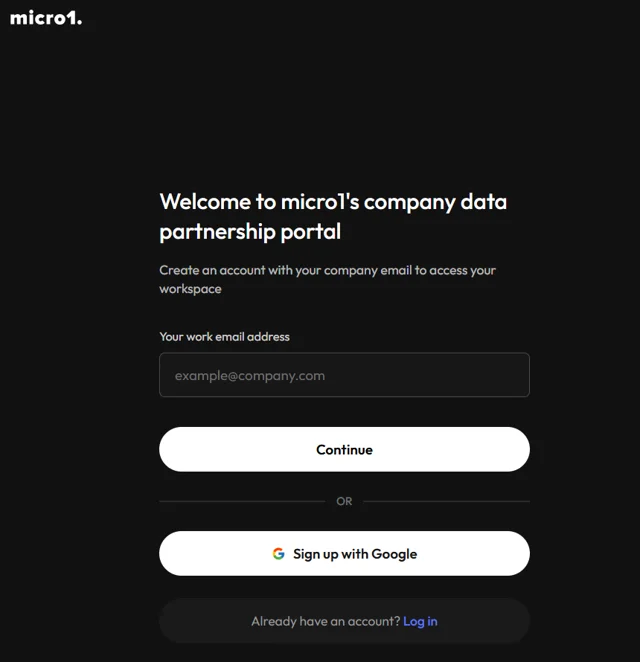 micro1 will ask you to enter your work email to register.
I'm not employed by micro1. If a company signs up through my introduction, micro1 may pay me a referral fee. It costs you nothing and doesn't change your terms.
More guides
- Why AI companies pay for business dataWhat they're buying, and why everyday work is valuable
- Is it a scam?The evidence the program is real, and six warning signs
- micro1 reviewWhat micro1 offers, and the concerns to weigh
- What is your data worth?Published figures and what sets the price
- How names are protectedDe-identification explained, and what to ask before you sign
- If your company has closedWho qualifies, and who can still sign
- An intangible assetValuing or selling a business that holds years of records
- Non-dilutive fundingHow data licensing compares with grants and loans
- HMRC Time to PayHow it works, and where data licensing fits

About the author
Sean Key has been a freelance consultant for 22 years, mainly delivering data and digital projects into the NHS. He runs Applied Clinical Judgement, which connects professionals with AI training work, and helps established companies weigh up micro1's Company Data Partnerships program.
He isn't a lawyer and isn't employed by micro1. If your company signs up through his introduction, micro1 may pay him a referral fee at no cost to you.
Sean Key on LinkedIn (opens in a new tab) · Book a call (opens in a new tab)